
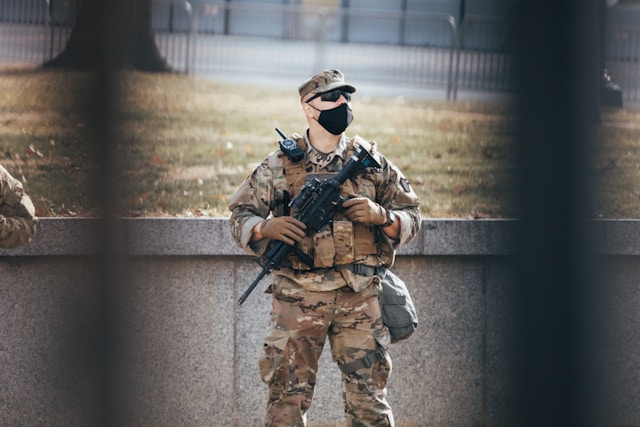
 Washington, DC, has been under the watchful presence of National Guard troops since mid-2025, a deployment extended through November as part of a federal initiative to bolster security in the capital.
This ongoing military support aims to enhance safety amid rising concerns and to protect residents, visitors, and federal properties. But how does prolonged deployment impact the city’s overall security landscape and what does it mean for local businesses, security professionals and law enforcement?
The National Guard strengthens security presence in key locations
The National Guard deployment significantly increases manpower in the city, especially around high-profile federal buildings, metro stations and major public spaces. Guards serve as a visible deterrent to crime and potential threats, complementing local Metropolitan Police Department efforts. Their patrols help cover a broader area, allowing civilian police to focus on investigative and community policing tasks.
This added layer of protection should contribute to measurable reductions in certain crimes such as carjackings, robberies and violent offenses. It should also reassure residents and tourists that the capital is taking proactive steps to enhance safety during a period of heightened national attention.
Collaborating effectively with local law enforcement and security guards
Bringing the National Guard into city security introduces a complex dynamic between military personnel and civilian agencies. Coordination and clear communication channels are critical to avoid overlaps and ensure each entity operates within defined roles. Military troops provide support primarily in static and patrol capacities, while Metro police retain operational control of law enforcement.
Here at EPS, we recognize the importance of these integrated partnerships, which — when managed effectively — can create a seamless security network that benefits both the public and officers. We can work alongside both the National Guard and local law enforcement to implement targeted crime reduction strategies.
Potential challenges and community perspectives
Despite the benefits of the National Guard, extended deployment has faced criticism and legal challenges. Concerns about military involvement in domestic policing raise constitutional questions, specifically regarding limits on military roles in civilian law enforcement. The DC Attorney General filed a lawsuit arguing this presence infringes on local autonomy and legal protections.
Community opinions are mixed. Some residents appreciate the increased security, while others view the deployment as an overreach, fearing militarization of public spaces. Balancing security needs with respecting civil liberties is a delicate challenge, one that law enforcement agencies and local security providers must approach carefully.
What’s the impact on private and public security services?
The National Guard presence also affects how private security firms operate within the capital. With federal troops handling perimeter and high-risk site patrols, security companies can concentrate on additional layers of protection inside buildings, events, and private commercial or residential locations.
At EPS, we can adapt by enhancing coordination with law enforcement and military forces, optimizing resource deployment, and refining risk assessments to complement the broader security environment. Understanding these evolving roles ensures private security remains effective and responsive to client needs.
Looking forward with preparedness and adaptability
The National Guard’s deployment status remains fluid, with extensions possible depending on evolving security conditions. Flexibility and preparedness among all security stakeholders are vital. Continuous training, joint exercises, and information sharing will help maintain a high level of readiness regardless of changes.
EPS remains committed to supporting Washington’s security infrastructure by providing expert services that operate in harmony with public safety initiatives.
Conclusion
The DC National Guard deployment brings both significant security benefits and complex challenges. Its presence strengthens deterrence and extends patrol capabilities but requires careful coordination and respect for civil rights. For private providers like us, adapting to this new environment and collaborating closely with public partners is key to enhancing citywide safety.
As Washington navigates this unique security chapter, EPS stands ready to support comprehensive protection strategies that safeguard the capital’s residents, visitors, and assets efficiently and professionally.